
What is school financial management software?
School financial management software is the system that controls an institution's income: payments received, outstanding fees, billing, and the account statement each family sees. In KMPUS it runs on the same data as academic management and admissions, so a student's enrolment and their charges are never two separate records that someone has to reconcile.
It is used by schools, academies and training centres that charge tuition — whether monthly, per term or per course — and need to know at any moment what has been collected and what is outstanding.
What you bill for changes the shape of the module: K-12 schools bill families per term with siblings and scholarships, language academies bill per course or per month with agent commissions, and private tutors getting paid on time charge per class pack.
- Payments, outstanding fees and billing managed in one module
- Reports on income, expenses and payment status, updated in real time
- Transparent account statements for families
- Charges generated from the student record, with no duplicate data entry
- Fewer manual errors, because the information is entered once
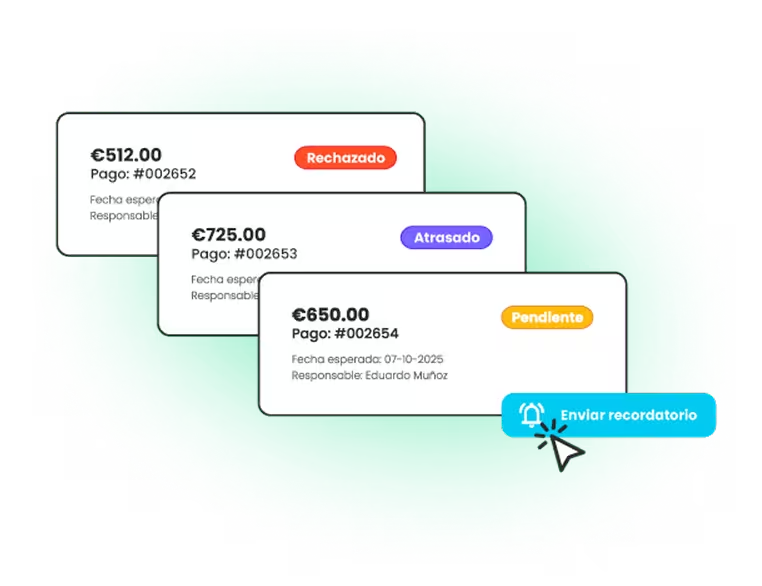
Control of payments, collections and billing
Manage all the institution's income from a single module. Register payments, control pending quotas and manage billing in a clear way, avoiding manual errors and information duplication.
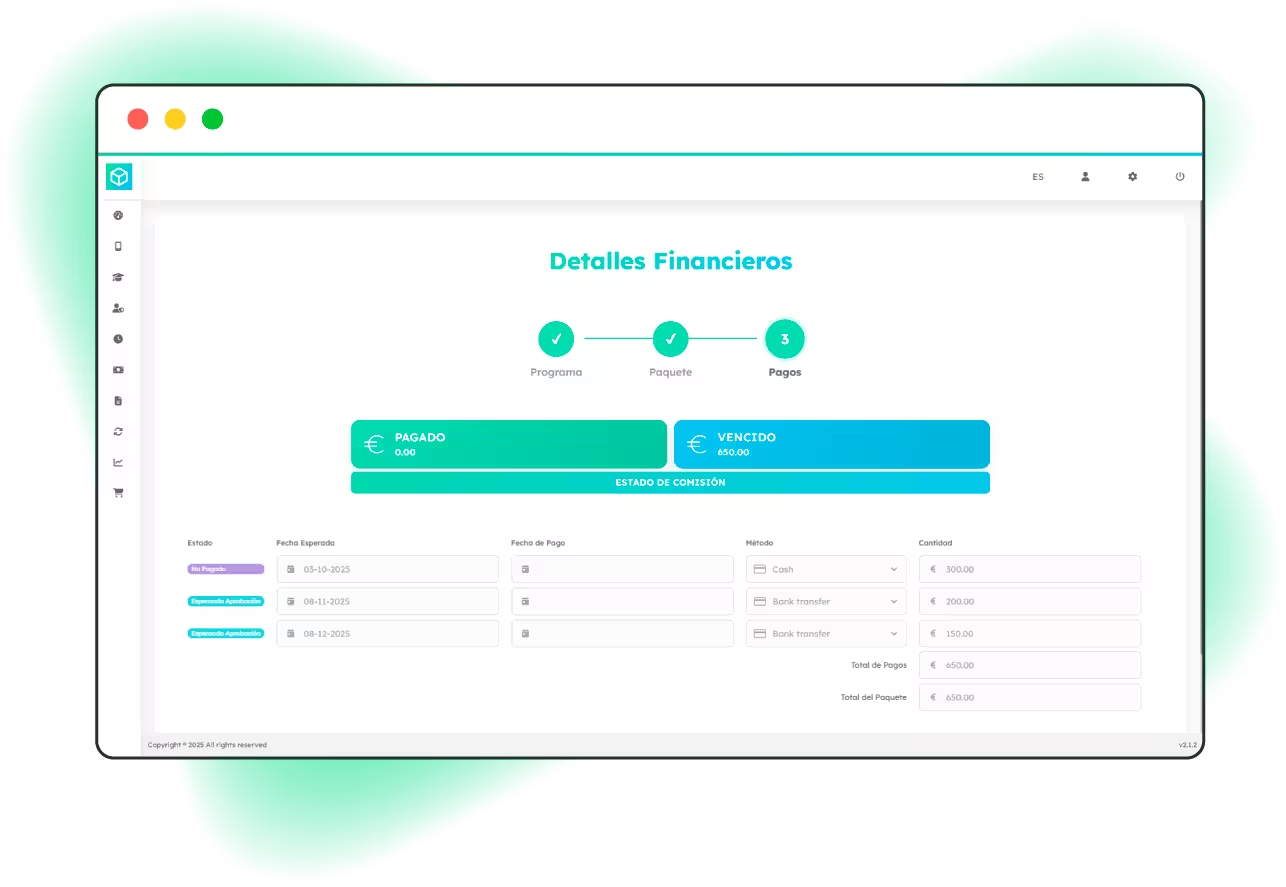
Detailed financial reports and in real time
Access updated reports on income, expenses and payment status. Get a clear view of the institution's financial situation for better planning and decision-making.
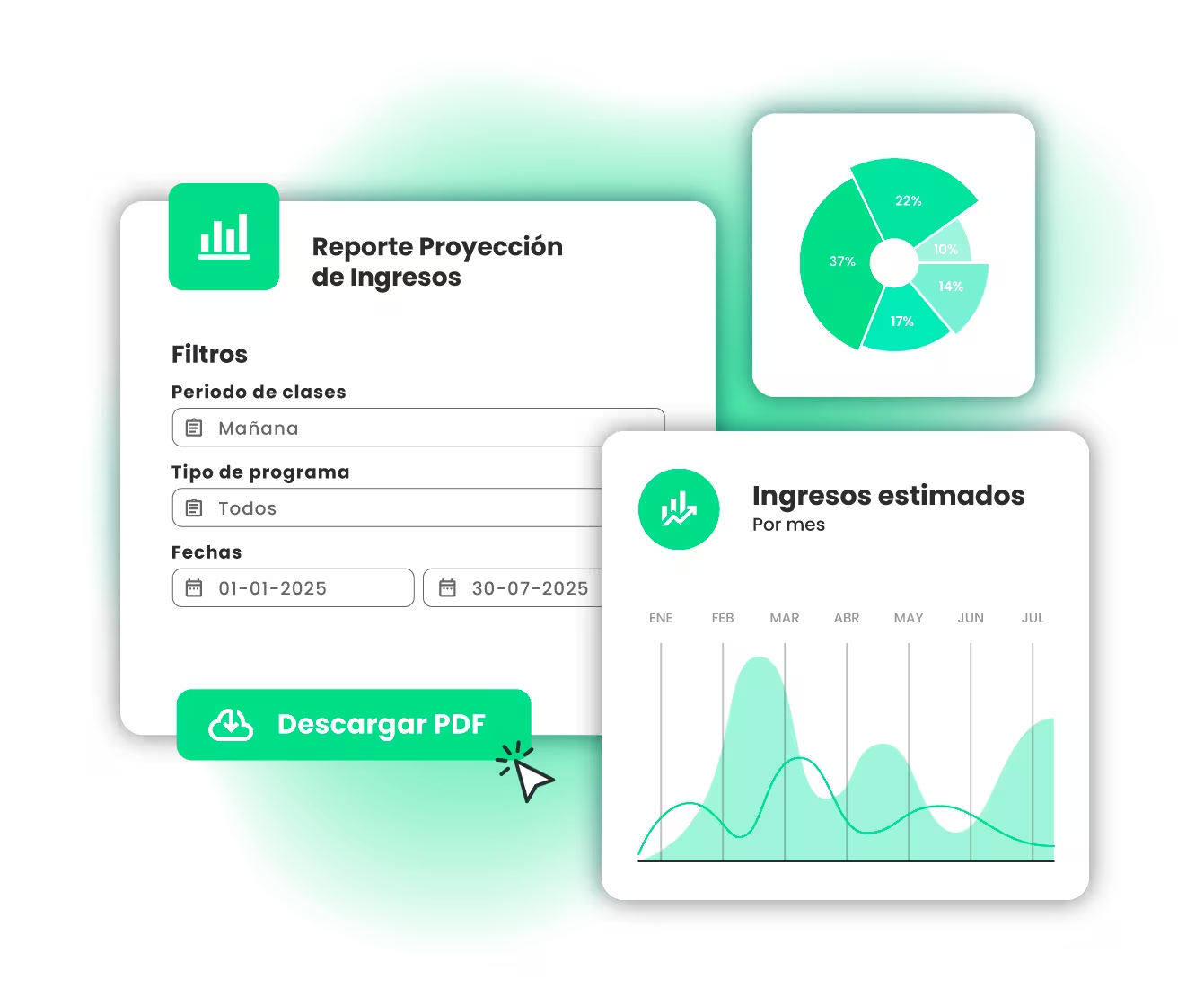
Clear account statements for families
Provide families with transparent and updated information on payments made, pending balances and financial movements. Improve communication and reduce claims or confusion.
From the enrolled student to the collected payment
Billing starts from the academic record, which is what keeps finance and enrolment from drifting apart.
- 1
The charge originates in the student record
An enrolled student generates their charges in finance directly. Nobody copies names and amounts into a separate sheet, which is where duplicated and contradictory data usually comes from.
- 2
Payments are recorded as they come in
Each payment is registered against the student, and the outstanding balance updates with it. What has been collected and what is pending is a state of the system, not a monthly reconstruction.
- 3
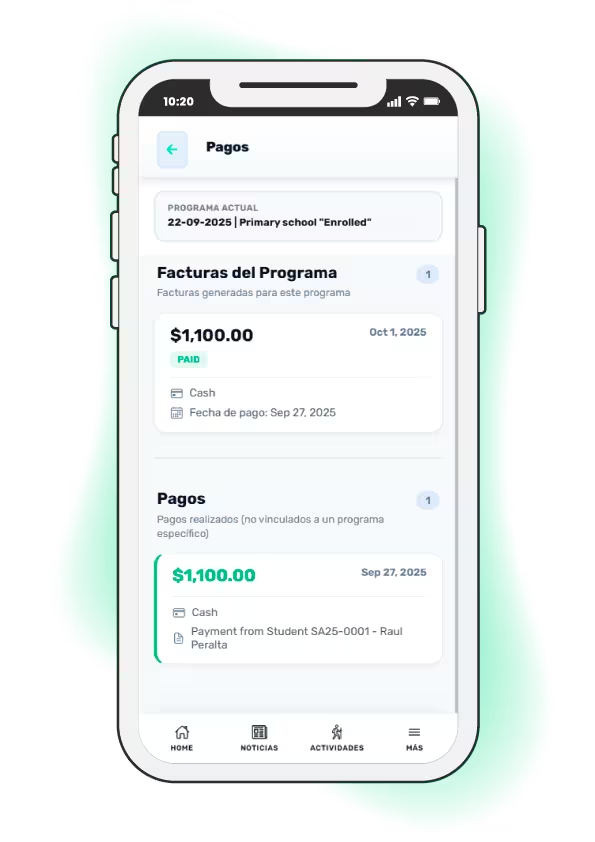
Families see a clear account statement
Payments made, pending balances and movements are visible to the family in a transparent way, which is what reduces claims and confused conversations about what was already paid.
- 4
The institution reads its finances in real time
Reports on income, expenses and payment status stay updated, so decisions about the term are made against the current picture instead of last month's closing.
Financial tracking: frequent questions
Payments, collections and billing for the whole institution: recording income, tracking outstanding fees and issuing invoices, plus reports on income, expenses and payment status.
Yes. Each family gets a transparent, up-to-date account statement with payments made, pending balances and movements, which is what cuts down claims and repeated questions about a payment that was already made.
No. The charge is generated from the student record that already exists in KMPUS. Enrolment and billing run on the same data, so there is nothing to re-type and nothing to reconcile between two systems.
They reflect the current state of the system. Income, expenses and payment status update as payments are recorded, rather than at a monthly close.
That is the point of keeping it in one module. Information is entered once and reused, so the duplication and contradictions that come from maintaining a parallel spreadsheet stop appearing.
Yes. Outstanding fees are tracked per student, so the pending list is available at any moment instead of being rebuilt by hand each time someone asks for it.